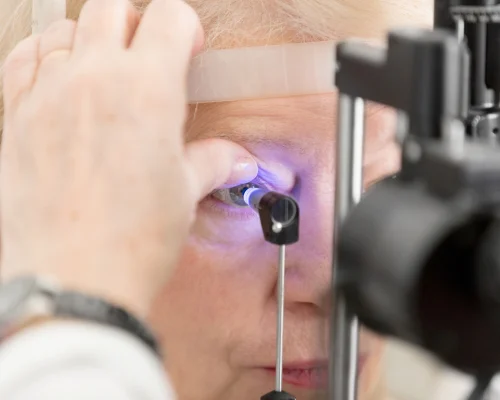
Glaucoma causes damage to the optic nerve, which if not treated, can cause progressive, irreversible loss of vision. Glaucoma is a general term that refers to a variety of eye disorders that lead to a build up of pressure in the eye, ultimately damaging the optic nerve. Regular eye exams are the best form of prevention when it comes to treating this condition.
Symptoms May Include:
Blurred vision
Loss of peripheral vision
Halo effects around lights
Redness in your eye
Eye pain
FAQs
Glaucoma is a group of eye conditions that damage the optic nerve, often due to increased pressure inside the eye. If left untreated, it can lead to gradual and permanent vision loss.
Glaucoma often develops without noticeable symptoms in its early stages, which is why it’s sometimes called the “silent thief of sight.” As it progresses, it can cause peripheral (side) vision loss.
Risk factors include being over age 60, having a family history of glaucoma, certain medical conditions like diabetes, and increased eye pressure. Regular eye exams are especially important if you fall into a higher-risk group.
There is no cure for glaucoma, but it can be managed with early detection and treatment. Prescription eye drops, laser therapy, or surgery can help control eye pressure and prevent further vision loss.